


ĚýThere are just over 300 data centres across Canada, mostly older facilities set up over the years to store data for software firms or connect telecom networks. Heading into 2026, eight larger hyperscale projectsĚýare currently under construction with about another three dozen at various stages of planning.
Those are small numbers compared to the United States. The U.S. has nearly 50 per cent of all global data centres, with hundreds more either under construction or proposed. Many of these are much larger than anything planned for Canada.
America’s domination of global data storage is leading to concerns about “data sovereignty.”
Canada and other countries around the world are responding with various regulatory mechanisms to exercise greater control over where their data resides and who has access for security and privacy reasons. This has become a prime pitch by provincial and federal authorities to build more data centres in this country.
Despite this, the new wave of hyperscale data centres is beginning to face serious public headwinds over two critical issues: power generation and access to water for cooling. The latest data centres are voracious consumers of both, which can have significant environmental and infrastructure cost implications.
This week’s column will examine the challenge of power generation.
Dramatic increases in electrical demand from data centres put strain on existing grids in the immediate term. Ěý
For example, Alberta’s grid currently can integrate only a small fraction of the total data centre load requests, TD Investments.
Other provinces have similar capacity issues. Starting in January, data centre projects in British Columbia will be required to participate in a administered by BC Hydro and the province, “to help manage rising electricity demand, while creating a clear, transparent approach for future projects.”
Although perceived as being rich in hydro-electric power generation, Québec has instituted restrictions on new power procurement for large data centre projects, putting a halt on new development since 2024. More recently, Hydro-Québec has rates for data centres that consume more than five megawatts per year be raised to 13 cents/kWh, about double the price charged to other large power customers.
Over the longer term, future demand forecasts will force power authorities to build new generation and distribution infrastructure. Who will fund these future generation and infrastructure investments is becoming a critical question.
“It will be important to ensure that the costs of integrating new data centre loads are borne by the industry while keeping electricity prices affordable for ratepayers to maintain public support,” says TD.
Another solution might be for data centres to include a Bring-Your-Own-Power (BYOP) component in their proposals. Microsoft and Google have each made long term agreements to reopen dormant nuclear plants in the U.S., while Amazon is considering investing in Small Modular Reactors.
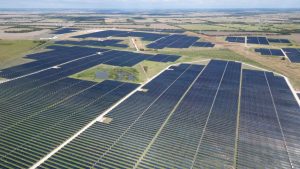
Renewables would also seem to make sense.
Here, Canada might take a cue from Illinois. The state is developers to make clean energy investments by restricting data centres to grid power in proportion to the amount of new clean energy they contribute to it. They would also pay for the grid upgrades such as transmission lines and substations. As a reward, these centres would be connected to the grid ahead of competitors.
In fact, Canada offers incentives under the federal allowing “certain expenses incurred during the development and start-up of renewable energy and energy conservation projects to be fully deducted in the year they are incurred, carried forward indefinitely and deducted in future years.”
While BYOP renewables might make sense, there are pockets of resistance in the United States.
Not every U.S. state or local community is keen to have large-scale renewable generation, such as solar farms, in their area. Clean energy news platform HeatMap, a number counties and towns are enacting moratoria that seek to block solar developments for data centres. have implemented policies, laws and regulations that hinder or restrict the growth of renewable energy. Ěý
Although Canada is blessed with large amounts of non-fossil fuel generation capacity, that isn’t the case in all parts of the country. The CBC a proposed data centre near Saint John, N.B., would take up the equivalent of almost half the electricity produced by a nearby natural gas plant, raising questions about greenhouse gas emissions. This has aroused strong opposition from many area residents as well as environmentalists and conservation groups.
In Alberta, Kevin O’Leary’s proposed $70-billion data centre, Wonder Valley, on 7.5 gigawatts of BYOP gas-fired generators once fully operational. Kyle Reiling, executive director at the Municipal District of Greenview No. 16, , “This approach will not risk electrical service reliability for the public.”

– Kevin O’Leary’s proposed $70 billion Wonder Valley data centre in Alberta will be powered by generators fuelled by natural gas
However, as much as 25.7 to 30.5 Mt of CO2 emissions could be pumped out annually unless carbon capture and storage technology is in place. The generators would also burn an estimated 10 per cent of Alberta’s current total gas supply. Despite this, Danielle Smith’s Alberta government has exempted Wonder Valley from environmental assessments.
Stateside, public sentiment appears increasingly wary of the entire idea of data centres. HeatMap says nearly 100 of 770 planned data centre projects in the U.S. are currently being contested by local activists or residents.
In Canada, matters have not yet progressed to that level. Yet, despite understanding their overall value, a recent Abacus study nearly 60 per cent of Canadians feel data centres are either a “bad thing” or “very bad thing.”
Their concerns extend beyond electricity rates to issues like water supply. This will be discussed next week.
John Bleasby is a freelance writer. Send comments and Climate and Construction column ideas to editor@dailycommercialnews.com.








Recent Comments
comments for this post are closed