

Property developers in the United Kingdom can be very bold when repurposing heritage buildings.
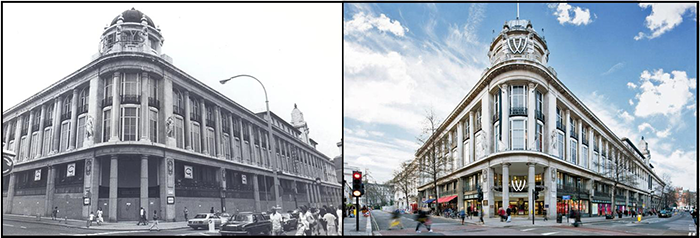
A recent example is the The Whiteley. This £1 billion project in the Bayswater district of London has transformed a former 1.1 million square foot Arding & Hobbs department store into ultra-luxury apartments and a high-end hotel spa.
The first phase of the original Whiteley building was completed in 1911 with a second phase added in 1925. Over the next 100 years, project architect Fosters + Partners , “decades of incremental repairs and changes further marred the clarity of the early 20th Century original.�
Today, a new retail arcade and ground-level entry points for London’s first create what Foster + Partners describes as, “a diverse retail and leisure experience that faces out toward the street.�
A public courtyard also occupies the ground level, drawing natural light and people into the building. On the upper floors are 139 luxury apartments and the 109 rooms of the Six Senses hotel.
In keeping with the original building’s Grade II preservation listing, many heritage elements have been restored, such as the original glass cupola and clock tower. The structure’s street front façade has also been brought back to what the architects describe as, “its former glory.�
The overall project targets a BREEAM rating of “Excellent” for new build elements andÌýBREEAM (domestic refurbishment) for restored elements. In addition, there has been a 20 per cent reduction in carbon emissions through onsite renewables and a dedicated central energy centre.ÌýThe Whiteley also features extensive rainwater and greywater harvesting systems.
To say The Whiteley targets the high-end of the London residential market would be an understatement.
Apartments currently range in price from CDN$8 million to CDN$73.6 million.
“Each residence embraces grand proportions and volumes unseen before in London. From one-bedroom apartments to duplexes and vast palatial penthouses, each provides one of the most exciting opportunities for modern living in the city,� The Whiteley says.
Unit owners began moving into The Whiteley in 2024. Amenities include a fitness studio, an indoor Padel court, a 20-metre indoor swimming pool, steam room and sauna, plus many Six Senses hotel features that provide residents with exclusive spaces, services and experiences. Residents can also utilize the 24-hour concierge and housekeeping services as well as co-working spaces, child care services and enticing events and programming.
On the South Bank of the River Thames, an extensive refurbishment completed in 2025 has preserved and upgraded another Grade II-listed building.
Designed by the late Sir Denys Louis Lasdun, the 76 Southbank project is a London monument to the once-popular Brutalist style of the early 1980s. Lasdun, regarded as one of the United Kingdom’s greatest architects, also designed the nearby Royal National Theatre.
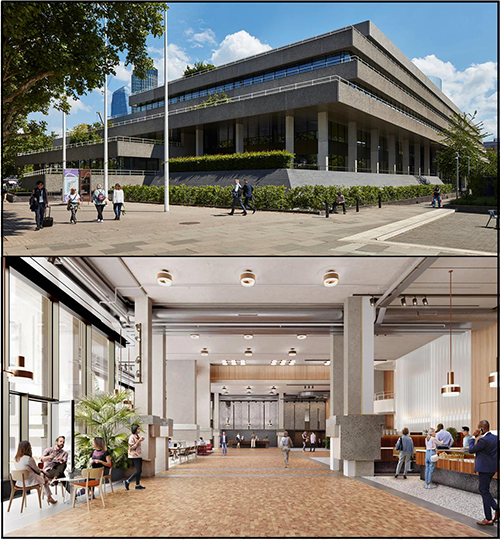
Demolition of the building, originally designed as corporate offices for IBM, was never really an option. However, as much as the building warranted preservation, some things had to change. In response, architecture firm Allford Hall Monaghan Morris (AHMM) came forward with a revitalization plan that retained 80 per cent of the original building but added human elements to the austere concrete structure.
“The entrance, by any modern standards, would be deemed to be deflating,� Simon Allford, executive director and head of studio at AHMM. “For a building of this scale and intensity of use, there was no sense of scale, generosity, arrival or indeed clarity of where you were going in the building from here.�
One example of change was the replacement of vehicle ramps with entry steps for people. Of the total 420,000 square footage, nearly 40,000 is now restaurant and retail space at ground level.
At the same time, project developer Stanhope , “innovative technologies and construction methods have been employed in order to keep carbon levels to a minimum.�
AHMM 76 Southbank achieves both a BREEAM Outstanding rating and a five-star certification under the NABERS Design for Performance standard, and now boasts an upgraded thermal envelope that creates a highly energy efficient scheme with an embodied carbon figure of just 365kgCO2/m2.
With a focus on occupant well-being, the building also meets WELL Gold standards, says AHMM. Features include more than 500 cycle parking spaces, high quality end-of-trip facilities, over 50,000 square feet of full-length outdoor terracing that is irrigated with harvested rainwater and 20 new trees within the public realm.
Many of Lasdun’s original design features now contribute to the contemporary ambience inside the building. The massive 10,000 square foot double-height reception area, brightened by generous exterior glazing, exposes the structure’s original Brutalist concrete frame. Ceilings in the office spaces are over nine feet high. Flexible floor layouts allow easier re-configuration of tenant space as needs change over time.
The project has been recognized with numerous awards, including the 2022ÌýNew London Award for Conservation, the 2025ÌýBuilding Award – Retrofit Project of the Year, and 2026ÌýBCO London Award – Refurbished/Recycled Workplace.
These two major projects preserve the design heritage of the United Kingdom while demonstrating to the rest of the world how everything that was once old can be new again.
John Bleasby is a freelance writer. Send comments and Climate and Construction column ideas to editor@dailycommercialnews.com.
Recent Comments
comments for this post are closed