

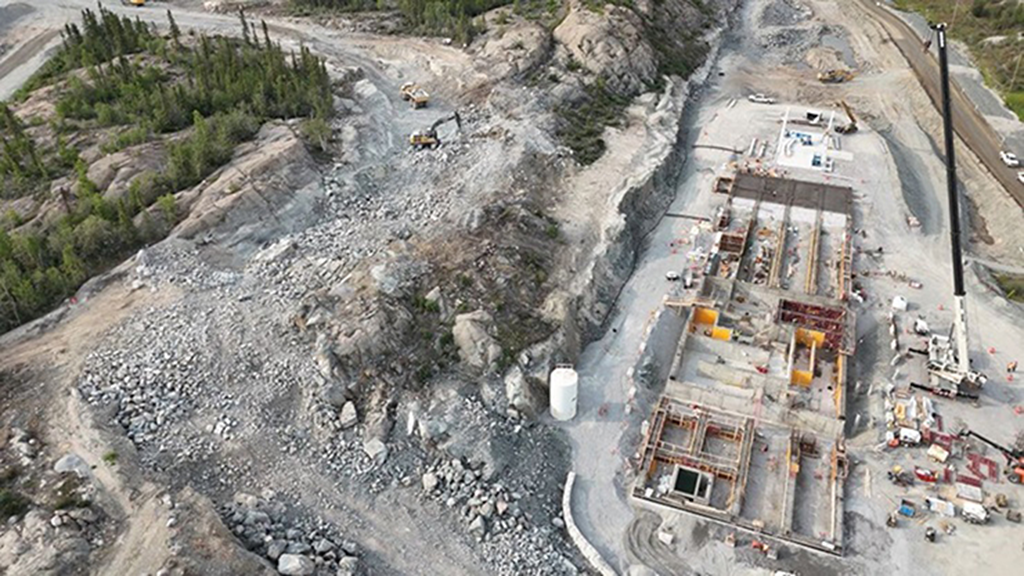
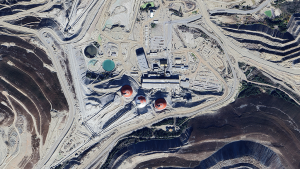
A small army of construction workers as well as a legion of excavators, bulldozers, loaders, graders and rock trucks are deployed at the Giant Mine site outside Yellowknife, N.W.T. where a complex and massive long-term remediation project and cleanup of arsenic trioxide waste is underway.
Crews are in the final year of constructing a permanent water treatment plant designed to treat contaminated water from the underground mine pool year-round as well as securing about 237,000 tonnes of arsenic trioxide dust left underground from decades of gold roasting operations.
Both are an essential part of the project, expected to continue until 2038, followed by perpetual monitoring and long-term care.
“The main goal of the Giant Mine Remediation Project is to protect the environment, and human health and safety,” Meghan Housley, communications officer at Crown-Indigenous Relations and Northern Affairs Canada, explained in a statement for the Journal of Commerce. “It is also important that local northern and Indigenous peoples and businesses benefit from the project activities.”
The new water treatment plant – now about 80 per cent complete and expected to be operational by early 2027 – is central to that goal.
Giant Mine was operated from 1948 until 2004. For years, contaminated water seeping into the underground mine workings has been pumped to the surface, stored in a tailings pond and treated seasonally at an effluent treatment plant that reduces the concentrations of arsenic and other contaminants of concern before discharge into Baker Creek, which flows into Great Slave Lake.
Two submersible pumps keep the level of mine water well below the bottom of the deepest underground arsenic storage chambers.
The new facility will replace that aging system with continuous, year-round treatment.
Housley said the mine water and local surface waters are regularly monitored to ensure arsenic trioxide does not escape into the environment.
“Water that leaches into the underground is pumped to the surface and treated to meet criteria set by the regulatory agency before it is discharged,” she stated. “The long-term vision for the site is to restore as much land as possible for future use and to maintain clean water output from the water treatment plant.”
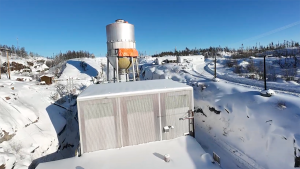
Teams led by Aecon are currently installing major equipment inside the plant and its biomass heating building, part of a sophisticated operation designed to raise treatment standards while lowering environmental impacts.
Once commissioned, water pumped from the underground mine pool will be treated continuously before being released to the environment. Unlike the current system, the new plant will not rely on settling ponds. Instead, it will produce sludge that will be safely disposed of in a specially engineered containment cell in the site landfill. The plant will also be heated by biomass, reducing greenhouse gas emissions.
Just as significant is the work underground.
The highly toxic arsenic trioxide dust is stored in 14 underground chambers and stopes. The waste is a byproduct of the mine’s historic roasting process, which extracted gold from arsenopyrite ore but also released arsenic gas that condensed into fine dust.
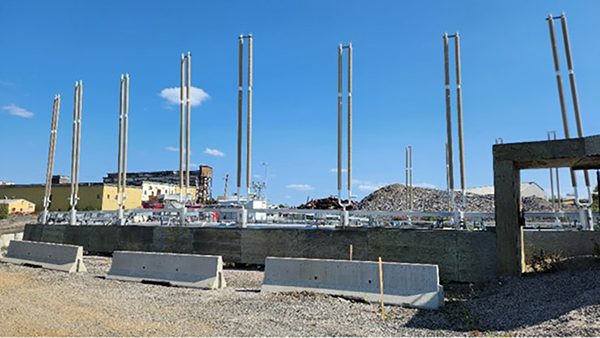
Rather than attempt the risky task of removing the material, project engineers chose what is known as the frozen block method. The concept is deceptively simple: freeze the arsenic where it sits.
Using passive thermosyphons, crews cool the surrounding rock to create frozen shells around the chambers, isolating the dust from groundwater and preventing arsenic from migrating into the environment.
“Safety was the most important factor in choosing the frozen block method to address the arsenic trioxide waste,” noted Housley. “The safest way to manage the waste is to freeze it where it is, undisturbed, and prevent it from contaminating the underground water.”
The method minimizes the risks of worker exposure, accidental release and long-term contamination. Importantly, it also avoids creating a second contaminated disposal problem elsewhere.
Above ground, remediation is advancing on multiple fronts.
The project is in the final year of decontamination and deconstruction of the Core Industrial Area, including the former mill and tailings reprocessing facility – a major effort to dismantle some of the mine’s most contaminated infrastructure.
Most demolished material will be placed in a non-hazardous onsite landfill that will eventually be capped and monitored.
Crews are also sealing underground openings, upgrading Highway 4, placing highly contaminated soil into Chamber 15 for secure storage and preparing for future earthworks packages that include tailings relocation, pit backfilling and further rehabilitation of Baker Creek.
Major milestones already achieved include closure of the underground mine, demolition of the old roaster and former townsite structures, backfilling near-surface stopes, creation of revegetation test plots and cleanup of legacy metal waste.
The logistics and co-ordination required to manage a contaminated site of such scale and complexity is immense. Dozens of staff have been involved in sequencing overlapping work packages, co-ordinating contractors and consulting with Indigenous governments, regulators and local stakeholders.
The remediation effort is co-managed by the federal and Northwest Territories governments and includes involvement from rights holders and oversight bodies. Local and Indigenous participation, officials say, is fundamental not only to the cleanup itself but to the long-term stewardship that will follow.


Recent Comments
comments for this post are closed