

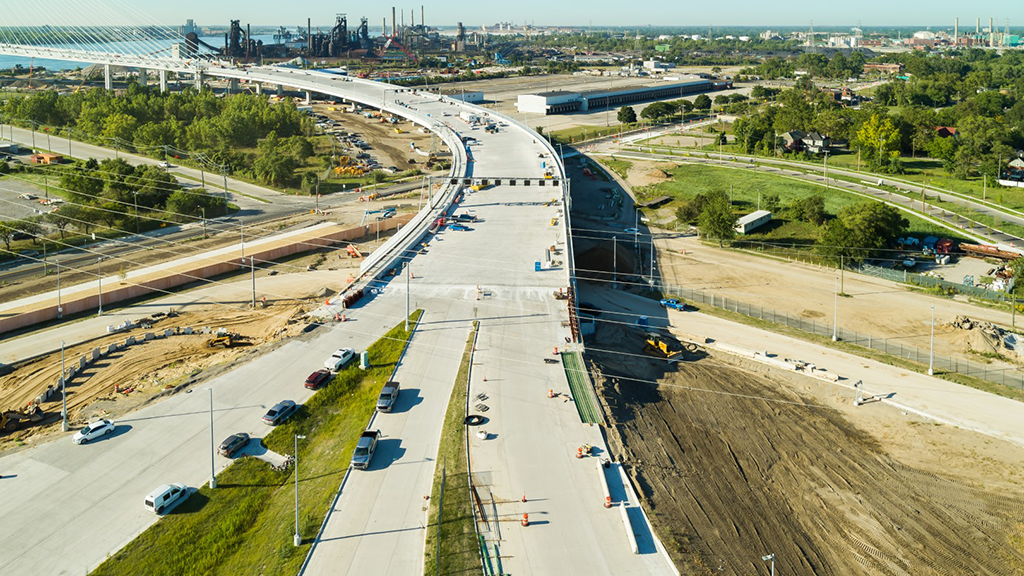
After more than six years of construction the $6.4 billion Gordie Howe International Bridge linking Windsor and Detroit is now expected to open in “early 2026,” according to officials.
Construction began in October 2018 and the twin “hockey stick” arc like concrete bridge towers were topped off in December 2023. The bridge deck linking the two countries – the longest cable-stayed bridge in North America at 853 metres or 2,800 feet – was joined in a ceremony in June 2024.
In recent months the bridge has the appearance of being completed and in fact is lit at night, providing a dramatic new silhouette to the Windsor-Detroit skyline.
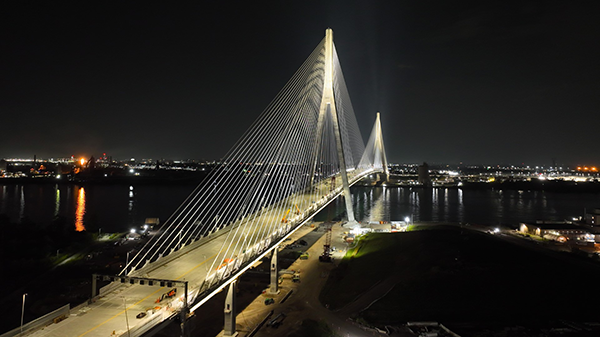
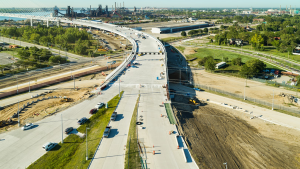
And, say officials, 98 per cent of work has been done. However, completion of the port of entry (POE) buildings like toll booths, customs and warehouses, along with landscaping, are in the final stages. Moreover, ramps on the Detroit side linking the bridge to Interstate 75, and pedestrian bridge and street work, is still underway.
The six-lane bridge was touted to open late this year but construction delays, including because of the COVID-19 pandemic, have been blamed for the later opening. That hasn’t stopped online rumors suggesting the delays are everything from U.S. customs being slow to field a full staff complement, to President Donald Trump deliberately delaying it to penalize Canada over the tariff issue.
Not true, according to bridge officials, though there is some accuracy to the customs allegation.
Tara Carson, spokeswoman for the Windsor-Detroit Bridge Authority, says the operator is “providing all border agencies and our operating teams sufficient time to be ready to operate this new and modern land border crossing between the U.S. and Canada.”
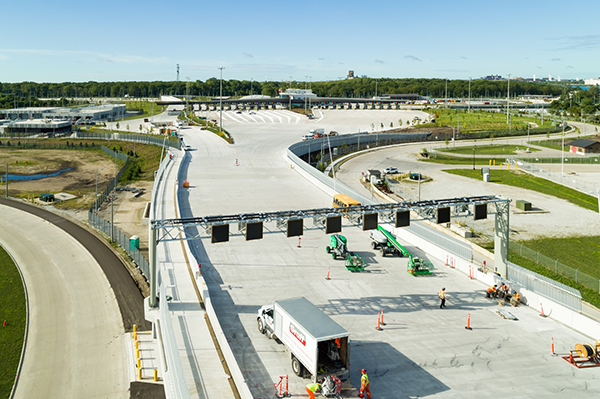
But a casual viewer can see that infrastructure, especially on the Detroit side, is still being worked on. In fact, a major part of the delay is due to extensive and stringent systems testing. As Carson says, officials “taking the time to do it right is time well spent.”
Much of the testing is technological, such as ensuring the fire suppression system is working properly; the bridge will be able to handle hazmat shipments.
As well, testing of traffic “connectivity” such as dynamic overhead signage to respond to real time traffic volumes and oversized vehicles.
The bridge has four components: the bridge itself, the Canadian and U.S. POEs and the “Michigan Interchange” with I-75 and local Detroit streets.
Carson says this is the current status of work:
- Final installation of the electrical, fire suppression and drainage systems, as well as barriers and fencing, the 12-foot-wide multiuse (pedestrian and cycling) toll-free lanes which will have their own small customs facility. Deck line painting is completed.
- At the POEs the focus is on interior finishing work, and fencing, landscaping and paving around the 36 U.S. primary inspection lanes and 24 Canadian ones.
At the Michigan Interchange crews are working on lane painting and sign installation. “Work also continues on the five new pedestrian bridges and local road improvements,” she said.





Recent Comments
comments for this post are closed