

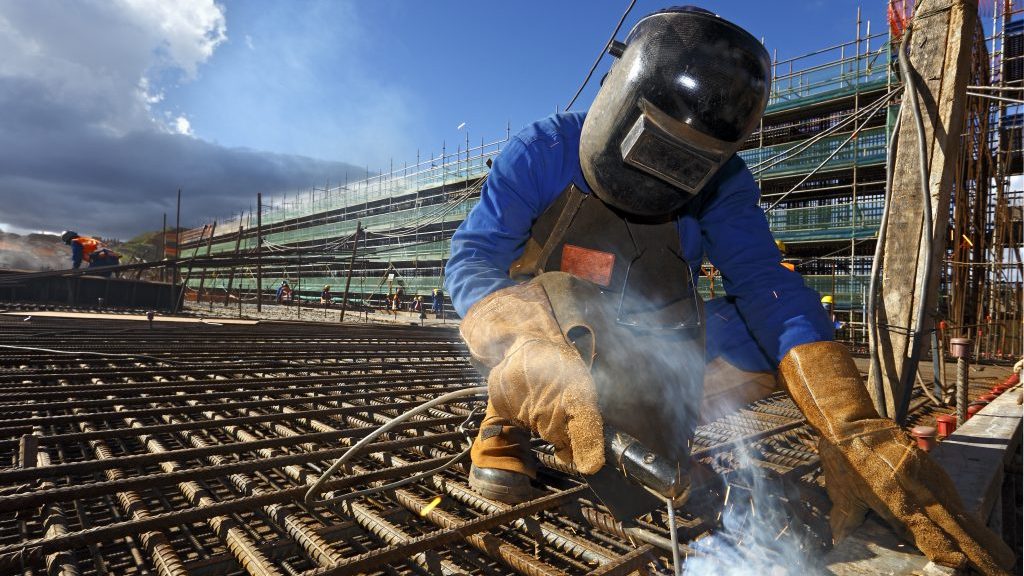
Among the top skilled trades in demand in Ontario for 2026 are industrial electricians, welders and boilermakers, truck mechanics, machinists and millwrights, according to the non-profit agency Skills Ontario.
“There is a lot of interest, focus and activity in the industrial, commercial and institutional areas,” says Ian Howcroft, Skills Ontario’s CEO.
That’s no surprise, with so much emphasis on infrastructure projects announced in the federal and provincial budgets this year.
What might be a surprise is that some of the big-demand trades, such as carpenters, didn’t make the top five.
“We’re not seeing as many houses built…so some of those traditional trades are not in as high a demand as trades in the infrastructure area,” says Howcroft.
Still, there are “clusters” of trades such as carpenters needed for nuclear refurbishment, small nuclear reactors and other sectors such as hospitals.
Trades shortages have been a big issue for the more than 35 years Howcroft has been in the field, but today training and recruitment campaigns are increasing and audiences are growing more receptive.
“We are taking more action…and seeing more programs introduced, more young people engaged and parents being won over.”
Every year the non-profit agency hosts the Skills Ontario Competition in Toronto. About 2,800 participants competing in many trades are expected at next May’s event. The three-day show features a series of conferences for various groups, including women, Indigenous groups, guidance counsellors and entrepreneurs.
Howcroft says the rise of new technologies both in traditional trades and new fields are rationale for Skills Ontario organizing competitions in robotics and mechatronics.
“They may not engage as many students but they are up-and-coming areas,” he says.
Last year Skills Ontario introduced a cyber-security skills competition for young people “to keep things fresh and as relevant as possible.”
The non-profit agency is also promoting trades in Cloud computing, data analysis and how AI will apply to traditional trades, he says.
The agency’s educational efforts include a fleet of mobile skills units, “trade and tech trucks” that provide hands-on opportunities for anyone considering a career in a trade.
“You can see what it is like through a simulator to operate a crane, drive a bulldozer, see what electrical is like,” he points out.
One of Skills Ontario’s key partners is apprenticesearch.com, which matches apprentices with employers. The agency also partners with colleges and union training centres.
Howcroft recommends young people who are uncertain about a career direction consider taking an aptitude test available through an app on Skills Ontario’s website.
“It also has information on where you can go to pursue your career pathway.”
The aging workforce is “a huge factor” in the pressing labour situation.
“Depending on what statistics you look at, probably over the next five to 10 years we’re probably going to lose between 50 and 60 per cent of the current workforce because of demographics, aging out,” he says.
Those figures are a catalyst for intensifying efforts in recruitment and training.
“We’re seeing a record number of competitors for our events (skills competitions),” he says, adding recruitment interest in high schools continues to grow.
“We’re hopeful that our work and that of our partners and other organizations will help to assure that we have more talent considering a skilled trade or technology career.”
Howcroft says the top fields for 2026 were determined through labour market analysis involving reviews of employment trends to see where shortages are most acute.



Recent Comments
comments for this post are closed