

 Daily Commercial News
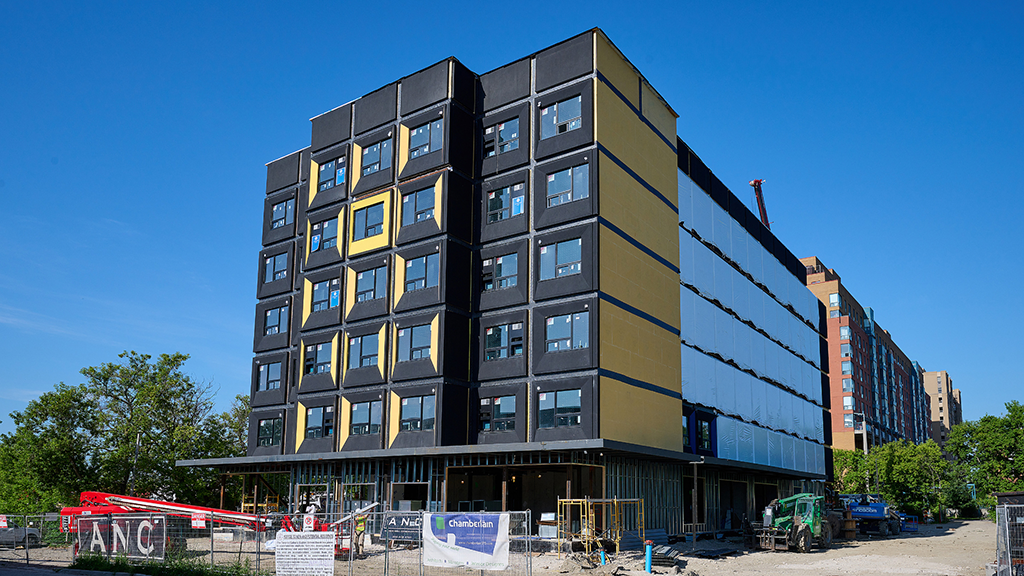
Brantford, Ont.-based ANC is showcasing how prefabricated modular construction methods can be used to build large structures like an apartment complex quicker than traditional systems.
The company is putting the finishing touches on a six-storey, 56-unit, modular apartment complex and training structure at the Canadian Helen Keller Centre (CHKC) for the deaf-blind in Etobicoke that’s being delivered in just over a year, half the normal time of traditional construction.
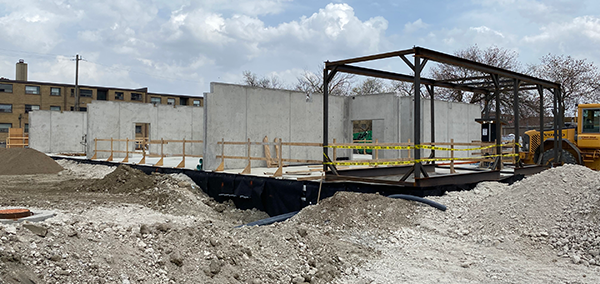
Crews have been able to significantly accelerate the construction timeline for the structure because onsite work such as excavating, installing the concrete slab and installation of a steel podium were able to proceed while modules for housing were manufactured off-site in a factory.
“The project demonstrates that modular construction can deliver high-quality results at or below the cost of conventional construction and in less time,” says Kevin Stewart, director, pursuits and projects at ANC. “With careful planning, it can also be well integrated with traditional building methods.”
All modular units in the building were installed this past summer. The project is expected to wrap up in March.
The rectangular structure, at 150 Eighth Street, will feature affordable units that are designed to meet the needs of Toronto’s deaf-blind community. The building includes accessible rental apartments plus a dedicated program and 6,500-square-foot training space for residents and others with disabilities. It will operate as supportive housing with onsite services.
The building will feature a ground-floor podium with a contemporary mid-rise structure above. It is comprised of steel-framed modules and precast concrete transitions that act as circulation cores. The facade features a high-contrast design with articulated windows.
Suites and common areas integrate accessibility features such as barrier-free layouts, level thresholds and accessible bathrooms to meet or exceed code for residents with mobility and sensory disabilities.
Many of the units also feature accessible kitchens. ANC’s modular design incorporates strategies like clear wayfinding, strong contrasts between finishes and careful detailing of transitions to support people with low or no vision and combined sensory loss.
ANC worked with a team from the CHKC as well as architects and consultants to convert the conventional design into a prefabricated modular, hybrid steel-and-concrete structure.
ANC’s project team completed a detailed, fully co-ordinated design, adapting the architect’s scheme into a set of modular units with integrated structure, systems and finishes.
“In our factory, ANC fabricates modules as volumetric units with steel and lightweight concrete structure, walls, floors, major mechanical and electrical rough-ins, and many interior finishes installed before transport to site,” explains Stewart.
“Modules are wrapped and loaded for transport to site, where onsite, cranes lift and set the modules onto the prepared steel-and-concrete structure, after which crews complete interconnections, exterior cladding, remaining interior fit-out and commissioning.”
According to Stewart, being able to do the onsite and off-site work concurrently is a key benefit of modular construction. Factory production offers controlled conditions and a safer work environment, and modular results in less waste and fewer trades for less time.
“While modules are being manufactured in our factory at ANC, sitework proceeds, including excavation, foundations, the concrete slab and steel podium structure. For this project, most modular pieces, excluding stair mods, start on level two and sit on the steel podium, while elements like the elevator and stair shafts are also fabricated to interface with the concrete base.”
Communication and co-ordination are key factors in success of such a project, notes Stewart.
“We work with stakeholders and our consultants to produce the design upfront, down to system penetrations and module interfaces, so that both factory and site teams can work in parallel without rework.”
Detailed 3D co-ordination by the design team of every feed, line and fire-protection element, along with disciplined scheduling and just-in-time delivery, is critical to ensure steel, foundations and modules all align on schedule.
Stewart says modular and hybrid approaches to building are gaining traction in Canada.
“This opens our opportunities to a wide range of applications from industrial to institutional and residential,” he says. “Modular building technology is developing and gaining popularity while our growth is driven by the need for speed, labour constraints, quality control and policy interest.”
The CHKC project is part of a growing portfolio of modular and hybrid construction builds completed or underway by ANC. The company is also exploring other advanced techniques such as void form technology for taller structures in seismic or extreme weather zones.
While modular construction brings key advantages to urban infill projects like the CHKC development, it remains to be seen if it is a silver bullet for the housing supply crisis facing the nation.
“Modular is a powerful tool we’re using to increase production speed and predictability,” says Stewart, “but industry and policy analyses note it is one part of the solution rather than a complete fix for the housing crisis. Its impact depends on factors such as factory capacity, financing, public procurement, zoning and integration with broader affordable housing programs.”
Recent Comments
comments for this post are closed