

Ìý
Jet Engines Become Grid Resources
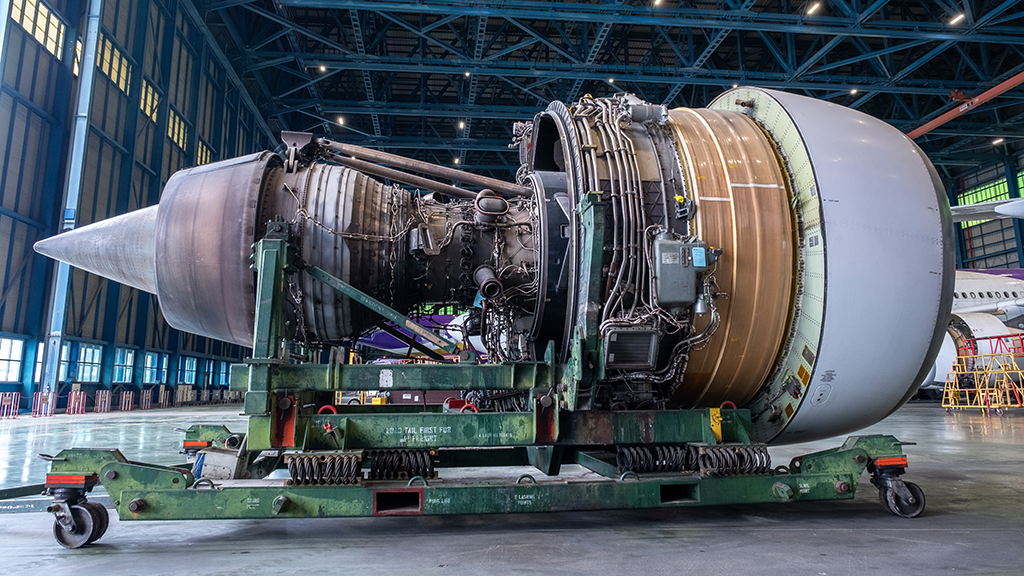
FTAI Aviation believes that retired and near‑retirement jet engines could help solve one of the biggest bottlenecks in the artificial intelligence boom by providing electricity toÌýdata centers.
The company announced in December 2025 the launch of FTAI Power, a platform to convert CFM56 aircraft engines into 25‑megawatt natural‑gasÌýÌýaimed at AI and cloud data center loads, with commercial production expected to begin in 2026, according to FTAI Aviation.
Ìýare lightweight, modular gas turbines derived from aircraft engines, optimized for high efficiency and rapid start-up. They canÌýprovide flexibleÌýpower generation for a variety of power needs.
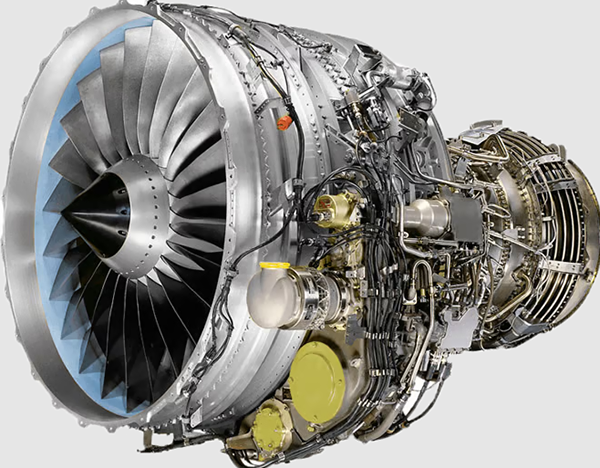
The CFM56 is the world’s most widely used commercial aircraft engine, with more than 34,000 units delivered, according toÌý, the engine’s manufacturer.
FTAI said in a statement that it controls more than 1,000 CFM56 engines and operates over 1 million square feet of maintenance, repair, and overhaul facilities worldwide, giving it both a supply of jet engine cores and an in‑house service network.
Under the program, those engines will be converted into land‑basedÌýÌýrated at roughly 25 megawatts each. That smaller block size, compared with large heavy‑duty gas turbines, is designed to give grid operators andÌýmore control over how and where they add capacity, according to the company.
Scalable and Flexible Solution
FTAI expects its factories to be capable of producing more than 100 units a year once the program is fully ramped, equivalent to aboutÌýannually at 25 megawatts per unit, according to company projections.Ìý
“The CFM56 engine market is the largest and most reliable in the world, making it an ideal candidate for aeroderivative conversion, which will further extend the engine’s life,� said Joe Adams, Chairman and CEO of FTAI Aviation.
“At FTAI, we have over one million square feet of maintenance facilities globally and billions of dollars of engines, which we believe gives us unrivaled capabilities.�
“After over a year in development, we plan to begin production of the FTAI Power aeroderivative using our proprietary conversion architecture, offering the market an alternative to address the unprecedentedÌý,â€� Adams added.
David Moreno, Chief Operating Officer, added, “The accelerating demand from AI hyperscalers has created an urgent need for immediate power solutions. We believe FTAI Power will be a critical partner forÌý, which requires unparalleled amounts of electricity faster and in a more flexible format.â€�
Ìý
How Jet Engine Conversions Work
FTAI Power’s process involves reconfiguring the core of a CFM56 jet engine into a compact power plant. Engineers replace the aviation fuel system to enable the engine to burn natural gas instead of jet fuel and swap out the large front fan for hardware designed to drive an electrical generator.
The result is anÌýÌýthat can start quickly, cycle flexibly, and fit on a relatively small pad footprint.
According to the company, a single engine can be converted in 30 to 45 days. These turbines are expected to operate for many years inÌý, even after their aviation lifecycle ends, effectively recycling high-value aviation assets into the energy sector.

Power Needs Driving Innovation
The rapid growth of AI and cloud computing is straining the global electricity supply. According to the International Energy Agency,Ìýuse is expected to more than double by 2030.
However, utilities face multi-year timelines to approve and build new generation and transmissionÌý, creating a gap betweenÌý.
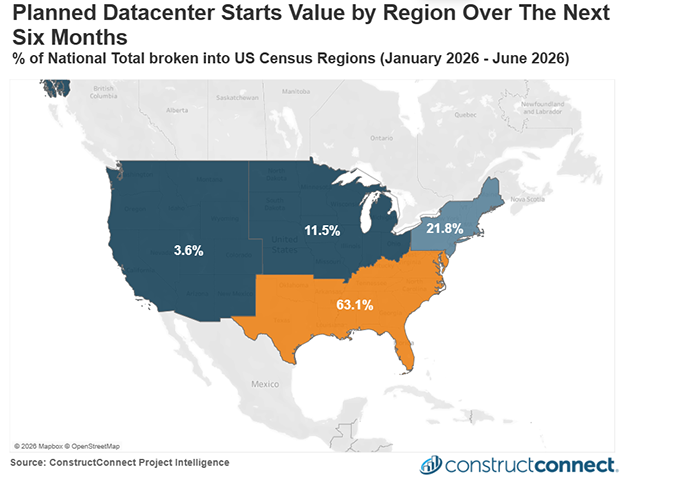
is tracking 76 data center projects, totaling over $88 billion, in various stages of preconstruction, with start dates in the next six months, according to theÌý
Aeroderivative turbines, such as those from FTAI Power, offer a possible solution. They can be deployed as modular blocksÌý, serving as interim “bridgeâ€� power until permanent grid upgrades are completed or as long-term peaking and backup capacity. These turbines may be suitable for data center operators who need prompt, reliable power to keep up with demand.
Ìý
What Does It Mean for Construction?
For the construction sector, the rise of jet engines for power is a sign of electricity as a binding constraint on data center growth.
ÈȵãºÚÁÏ and other analysts have highlighted how, with some large campuses adding dedicated onsite generation to secure capacity and manage reliability risks.
As more owners explore aeroderivative gas,Ìý, and other non-traditional sources, on-premises power islands could become a more common feature ofÌý.
This shift carries practical implications for general contractors, construction trades, and building product manufacturers:
More complex sites
Jet engines are elaborate machines. Projects that combine high-density computing, gas turbines, and grid interconnections will demand tighter coordination
New site-planning constraints
Turbine pads, fuel supply, exhaust stacks, noise abatement, and emissions controls introduce new design and permitting considerations, alongside support components such as racks, cooling, and battery systems.
Evolving risk profiles
As owners experiment with alternative power technologies, contractors may face changing contract structures, warranty expectations, and performance guarantees.
Ìý
Where are the Customer Orders?
As of the launch announcement, FTAI had not disclosed any signed commercial orders for its FTAI Power units, according to the company statement. The business still must prove its ability toÌý, ensure long-term reliability, and gain broad customer adoption.
Still, for data center developers searching for fast, modular power and for construction firms watching power constraints reshape project design, FTAI’s move signals how far and how quickly the AI buildout is pushing the boundaries betweenÌý.Ìý
A New Era for AI Power
FTAI Power’s launch signals a significant shift in how industries are addressing the growing electricity demands of AI and cloud computing. By repurposing the world’s most widely used aircraft engine, FTAI is not only extending the lifecycle of high-value aviation assets but also providing a scalable, flexible solution to one of the most pressing challenges in the AI economy.
As the program ramps up, it could reshape the intersection of aviation, energy, and construction, offering new opportunities for data center developers, contractors, and building product manufacturers alike.




Recent Comments
comments for this post are closed