

It’s likely no surprise Canadian construction industry leaders are elated with Prime Minister Mark Carney’s unveiling of the first five major projects on the government’s fast-track list, but there are some words of caution as to what needs to be prioritized within those projects.
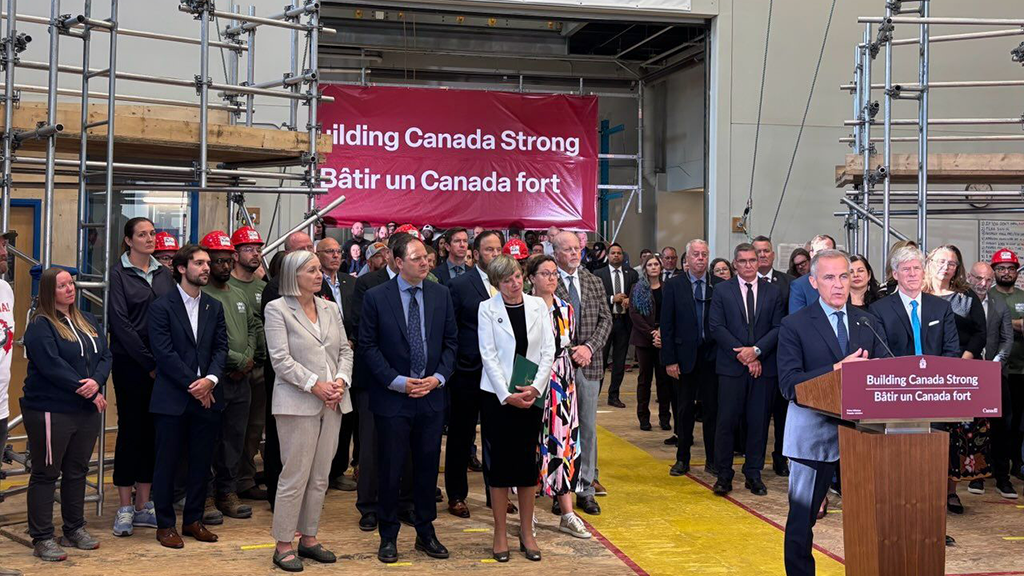
In Alberta on Thursday Carney announced Phase II of LNG Canada in Kitimat, B.C., the Red Chris Mine expansion in northwest B.C., the McIlvenna Bay copper mine project in central Saskatchewan, the Darlington New Nuclear project in Clarington, Ont. and the Contrecœur Terminal container project in Contrecœur, Que. would be the first in part of his plan to attract outside investment and bolster the Canadian economy as it faces headwinds from U.S. President Donald Trump’s tariffs and trade agenda.
The MCAC) was encouraged by the list and highlighted the projects will require at least 24,500 skilled trades workers for construction, and an additional 6,000 workers for ongoing operations.ÌýÌý
With the labour shortage ever-present already in the sector, the association noted scaling up the “growth-critical” skilled trades workforce will be critical to ensuring the projects move forward at the necessary pace.Ìý
“Canada’s contractors and skilled trades workers are ready to step up and support the government’s nation-building goals,” said Tania Johnston, MCAC Chief Executive Officer, in a statement. “Collaboration between government and industry will be vital to ensure the necessary workforce capacity is available, at the right time and place, to deliver these projects and secure Canada’s long-term prosperity.”Ìý
The MCAC has long advocated for an industry-informed labour market strategy to identify and address shortages across the mechanical trades and broader construction workforce.
“Growth critical trades must be prioritized for recruitment, training and retention supports,” it notes. “Without this focus, Canada risks delays in delivering the very projects meant to drive economic growth and strengthen national capacity.”Ìý
The (ACEC) stated it was “encouraged by this (Carney’s) bold vision. These proposed initiatives represent critical nodes for economic growth, resilience and opportunity across the country. Canada’s consulting engineering firms look forward to bringing these projects to life.”Ìý
However, the ACEC did state in order for the “nodes” to reach their full potential a network of infrastructure corridors must be invested in. Ìý
“T³ó±ð²õ±ð linear connections will ensure the long-term success of these projects while also laying the groundwork for future nation-building initiatives,” the association states. “This approach will help Canada remain competitive and position itself as a global leader in infrastructure and innovation.”
The (CCA) also applauded the Major Projects Office’s announcement calling it a “major success for CCA who has long advocated for the .”Ìý
“We have been advocating for the reduction of red-tape and greater investment in national, shovel-worthy infrastructure projects for many years, including through our leadership of the Canadian Trade Infrastructure Plan,” said Rodrigue Gilbert, president of CCA. “Today’s announcement further cements the importance of our industry and the role we play in supporting and enhancing the everyday lives of millions of Canadians, enabling our national economy, and bolstering our supply chains.”Ìý
president and CEO Paul de Jong said the association fully supports streamlining approvals for projects, “but first, investors must be convinced that projects will be approved through a process that’s not only faster, but clearer and more objective. That’s critical to getting these projects over the finish line.”ÌýÌý
PCA believes a “truly competitive construction market is key to attracting investment in Canada’s large-scale public projects,” which means a competitive bidding process and commitment so “all qualified construction workers” have the chance to build these projects. Ìý
executive director Sean Strickland said the government’s announcement shows they are going to “carry out their promise that Bill C-5 will create good-paying, unionized jobs.”Ìý
“Today’s announcement marks a tremendous moment for unionized skilled tradespeople right across the country,” he said. “By embedding strong labour provisions in these federal projects, we are not only creating jobs but also protecting workers’ rights, ensuring safe working conditions, and building a more inclusive and sustainable economy. This is a win for workers, communities and the future of Canada’s unionized construction industry.” Ìý







Recent Comments
comments for this post are closed