


Few construction trends gained as much traction across Canada and the United States this past year as office-to-residential conversions.
In the United States, the number of conversions underway skyrocketed from 23,100 units in 2022 to over 70,000 units at the start of 2025, according to a published by RentCafe.
In Canada, Calgary in particular has gained attention for its aggressive conversion incentive programs that have resulted in 21 projects being either approved or completed to date. More than 500 new residential units have already been created going into 2025, with another 1,000 units across 10 new sites on the way, according to a recent announcement.
Mayor Jeromy Farkas at a news conference last month how these additional conversion projects are helping Calgary meet its 10-year plan to revitalize the city’s downtown, an issue triggered by the sharp drop in property values after the 2014 oil and gas contraction.
“Nearly five years ago, city council set an ambitious goal to repurpose six million square feet of empty office space and transform it into homes, hotels, classrooms and community spaces,” Farkas said. “And today, I’m excited to share that we are nearly halfway there.”
One example of Calgary’s repurposing success is the vacant commercial tower at 800 6th Avenue SW, now known as . Conversion to residential began earlier this year and is expected to be completed by the autumn of 2026. Once converted to full residential use, 204 affordable rental units will be created.
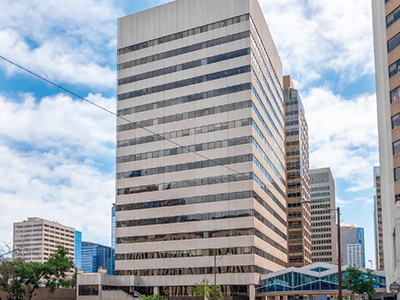
Repurposing an office building for residential occupancy is often complex. Each building poses unique considerations, ranging from structural layouts, floorplate challenges, MEP factors and fire code compliance.
As a result, repurposing can become very expensive. Without incentives offered by various levels of government, many of these projects would not move forward. Even then, serious analysis is required before an existing building can be deemed a worthwhile candidate.
In the case of Place 800, funding came from various sources: $62 million from the federal Affordable Housing Fund; $15 million from the City of Calgary; $900,000 from the Alberta Ecotrust Foundation; and a $4.9 million contribution from project developer Astra Group.
Alberta Ecotrust’s contribution helped the project meet Calgary’s climate targets. The project team is aiming for a 29 per cent reduction in operational CO2 emissions, a benchmark that could help position the building as a replicable model for other Canadian cities pursuing similar joint housing and sustainability outcomes.
Another office-to-residential conversion bringing new vibrancy into Calgary’s downtown is the , developed by Alston Properties. The former Class C office tower that once stood 80 per cent vacant has been transformed into 132 modern bachelor, one-bedroom and two-bedroom rental suites, half of which were pre-leased before it opened in late October.

The project is located close to the University of Calgary’s School of Architecture, Planning and Landscape, scheduled to open in January 2026. It should appeal to students, given amenities such as a fitness room, sauna, tenant lounge, bicycle storage and co-working space.
Once again, funding assistance made a difference. Calgary’s Downtown Development Incentive provided $7.5 million. Another $1.2 million from the Climate Retrofit Challenge assisted Alston to not only convert the building to its new purpose but also helped improve the building’s energy efficiency by more than 50 per cent and cut greenhouse gas emissions by 40 per cent.
Calgary’s downtown is already benefiting from these conversion projects, with a noticeable increase in downtown energy, evidenced by a growth in public art, retail activity and street life. The reduced vacancy rate also benefits city coffers by providing long-term tax stability.
As in Canada, office-to-residential conversion in the United States is also being fuelled by government support at several levels that has been used by several projects in cities such as Boston, Chicago and New York City.
Under Bill , reintroduced in the House of Representatives in March 2025, a credit equal to 20 per cent of qualified conversion expenditures is available for buildings at least 20 years old.
Among the stipulations are those requiring at least 20 per cent of the new homes created to be rent-restricted and reserved for households at or below 80 per cent of the area’s median income, maintained for a period of 30 years. Support from the bill can be combined with other government funding tools, such as the federal Historic Tax Credit.
According to modelling conducted by , funding allocations such as these could support hundreds of thousands of homes over time.
Heading into 2026, office-to-residential conversions could potentially reformat underutilized downtown cores across North America and provide a growing opportunity for the construction industry.
John Bleasby is a freelance writer. Send comments and Climate and Construction column ideas to editor@dailycommercialnews.com.







Recent Comments
comments for this post are closed