


Heading into the New Year, owners and designers can take inspiration from some dramatic achievements in design, innovation, material reuse and repurposing across a wide selection of project types.
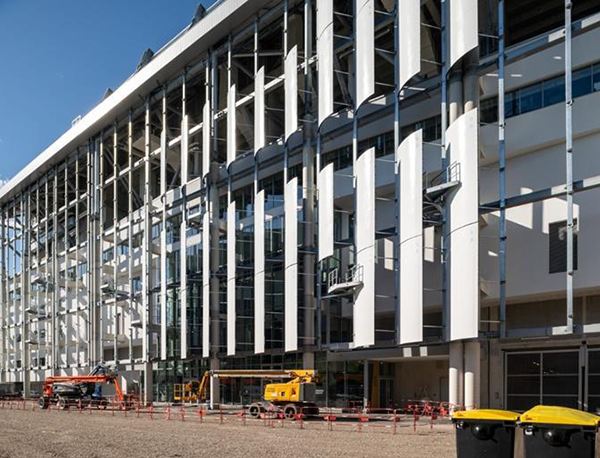
Material reuse is a highlight of the Stade de la Meinau in Strasbourg, in Eastern France, scheduled to be open next year. , overseen by London-based architects Populous, includes the construction of a new 11,712-seat south stand. What is notable is the use of nearly 200 commercial fuselage sections cut from 30 decommissioned Airbus A340 jet liners.
The aircraft panels cover a total surface area of over 4,000 square metres across the full south-facing façade of the stadium to create a unique system that will reduce interior heat gain. As part of Populous’ sustainability strategy, portions of the stadium undergoing demolition will be reused for the construction of new-build elements.
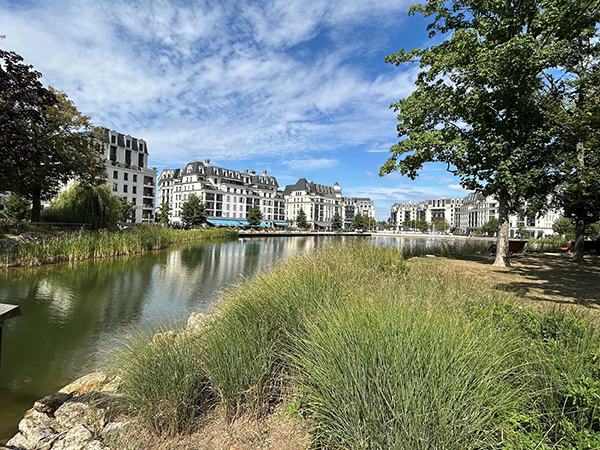
Also in France is a 5.3-acre brownfield site only a 30-minute tram and subway ride from Paris that has been heralded for setting new standards for residential development. offers gentle density in the form of low-rise Parisian-styled residential buildings between five and seven storeys, featuring mansard roof lines, detailed balconies, shutters and windowsills.
Project sustainability comes in several forms, including the incorporation of renewable energy sources. The buildings themselves have been designed to consume 10 per cent less energy than stipulated in the 2012 French thermal regulations (RT 2012) standards. More than half of the apartments enjoy a view over a small man-made lake and canal system lined with trees and bulrushes created as part of the development. The waterway system is fed by harvested rainwater, serving as a practical solution for water management as well as an esthetic highlight.
Walking and cycling on Clamart Panorama’s network of well-enclosed and walkable streets is the focus for resident mobility. And although the building façades suggest classic Lutetian Parisian limestone, they are actually made from a reconstituted stone mix. For a residential development where 30 per cent of homes are either social assistance or supported ownership, this not only makes economic sense but also demonstrates that affordability does not require the sacrifice of architectural beauty.
There has been global excitement surrounding 3D Concrete Printing (3DCP) and how the process can be mechanized and adapted to create homes, buildings and other structures. have developed an iteration of 3DCP that takes inspiration from the bone structure of animals and humans while simultaneously addressing the carbons associated with concrete.
“If you take a cross section of a bone, you realize that bone is quite porous, but there are certain patterns within which the load (or weight) is transferred,” Masoud Akbarzadeh, leader of the Diamanti project, CNN.
Akbarzadeh’s team combined that natural concept with robotic 3D printing to create complex, lattice-like patterns. They also used a sustainable developed by Dr. Shu Yang at the University of Pennsylvania’s Material Science Department that absorbs 142 per cent more carbon dioxide than conventional concrete mixes.
The research team tested their ideas by . Since CO2 absorption is a function of surface area exposed to air, higher absorption was achieved through the bridge’s bone-like design. Further carbon reductions are achieved through the use of the 3DCP process, reduced steel and the bridge’s modular assembly. The Diamanti bridge concept debuted at the 2025 Venice Architecture Biennale’s Time, Space, Existence exhibition and has recently been scaled up to a nine-metre version for installation in Paris.

Repurposing and restoration is evident in the major extension of the 200-year Old Vic, one of London’s most treasured and historic theatres. Project designers Haworth Tompkins the new
“Backstage” building as, “a welcoming destination for the local community and a much-needed expansion of the theatre’s working and engagement spaces.”
The 10-metre-wide site was acquired by The Old Vic in 2015. Over 1,200 square metres of new space has been created, including a triple-height café and bar, script library, a dedicated Writers’ Room, a new green room and an event space with a roof terrace. A learning centre, upgraded dressing rooms, staff offices, toilets, showers, a cycle storage provision, and a flexible studio space converted from a rehearsal room are also part of the design.
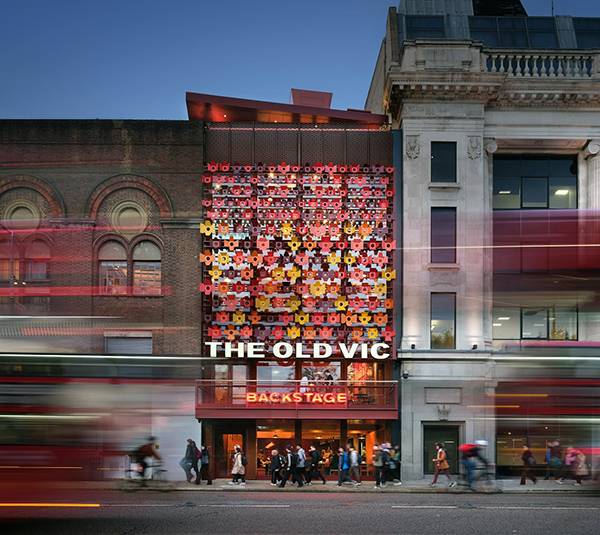
The Backstage building is described as a vibrant civic space and an exemple of sustainable and inclusive architecture.
“For the first time in The Old Vic’s 200-year history, the stage door and back-of-house areas are now fully accessible. The new Backstage building introduces step-free connections across all floors,” says Haworth Tompkins.
European spruce glulam timber and solid timber floors have been used in combination with recycled materials such as salvaged brickwork. Natural ventilation, air source heat pumps and passive cooling strategies dramatically reduce operational energy demand.
Exciting real-world examples of sustainable design and construction like these should continue to inspire designers and project owners in 2026 and beyond.
John Bleasby is a freelance writer. Send comments and Climate and Construction column ideas to editor@dailycommercialnews.com.





Recent Comments
comments for this post are closed